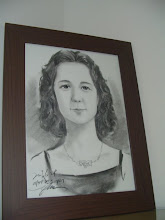
Anna Wierzbicka
"According to Izard and Buechler (1980:168), the fundamental emotions are 1. interest 2 joy 3 surprise 4 sadness 5 anger 6 disgust 7 contempt 8 fear 9 shame/shyness and 10 guilt."
"English terms of emotion constitute a folk taxonomy, not an objective, culture-free analytical framework, so obviously we cannot assume that English words such as disgust, fear, or shame are clues to universal human concepts or to basic psychological realities. Yet words such as these are usually treated as if they were objective, culture-free 'natural kinds'."
Polish words tesknota and teskknic:
"X teskni do Y -->
X thinks something like this:
I am far away from Y
when I was with Y I felt something good
I want to be with Y now
if I were with Y now I would feel something good
I cannot be with Y now
because of this, X feels something bad.
"Several English words may come to mind as potential translation equivalents of the Polish word (homesick, long, miss, pine, nostalgia) but they all differ from another and from the Polish term as well."
"Both everyday speech and psychologically sensitive literature are full of attempts, often highly successful, to convey feelings for which there is no simple word."
"What is really important, I think, is that the feelings of lek and of tesknota are not sufficently salient in our American culture to have merited lexicalization...lexical differences between lek and guilt, or between tesknic and miss, may not only reflect but also encourage different, culture-specific, modes of hinking and feeling.
Are there any emotion concepts which have been lexically recognized as distinct and identifiable in all languages of the world?
The evidence available suggests that there are no such emotions."
Comparison of the English disgust and the French degout:
Izard (1969) reports that French and American children show very similar patterns of growth of recognition of individual emotions with age. He notes, however, that with respect to disgust there is an unexpected difference: the French slightly exceed the Americans at most age levels. Izard tries to explain this puzzling fact in terms of greater emphasis placed on the culinary art in French culture:"
"...the English word disgust encodes a feeling caused by 'bad and ugly' human actions (or their results), not by food as such. This is not to deny that the English concept 'disgust' contains a reference to 'something like bad taste and an impulse to get something out of one's mouth', but in 'disgust' this reference serves only as a simile."
"From an ENglish speaker's point of view, shame and fear are two different emotions. But form the point of view of speakers of Gidjingali, apparentky they are not, because both are seen in terms of the same impulse to retreat."
"Many languages of the world (for example, Korean, Ewe in West Africa, and JKuman in Papua) don't lexically distinguish shame and embarrassment. In fact, the same word also seems to be applied to situations in which English would use the word shy rather than either embarrassed or ashamed."
"...some tests showed that pre-literate subjects in New Guinea failed to distinguish between fear and surprise."
Showing posts with label polish. Show all posts
Showing posts with label polish. Show all posts
Monday, May 25, 2009

Sunday, May 24, 2009
Bodies and their parts: an NSM approach to semantic typology
anna wierzbicka
She proposes that all languages have a word for "hands" and "head."
She's angry!
"To say that some far-away language has no word for 'hands' just because it uses the same word for 'hands' and (roughly) 'arms is like saying that Russian has no word for 'hands' becasue the Russian word ruki can mean eitehr 'hands' or (roughly) 'arms': or that English has no word for 'head' (as a body part) because the English word 'head' can also be used in some otehr senses."
"Ultimately, the only way to establish whether a wrd is polysemous or not is to show what the hypothetical 'gerneal' or 'vague' meaning might be."
"...while many concepts are language- and culture-sepcific, the concept of BODY is universal, just as the concepts of KNOW and THINK are universal."
"The hallmark of the NSM system is that meanings are represented in a tightly constrained, yet expressively flexible, "mini-language" of empirically established universal semantic primes along with ethir inherent universal grammar."
"It is or aspires to be a formal semantic metalanguage based on natural language."
"Crucially, an NSM explication is intended as a conceptual representation as well as a semantic one: what is of interest to NSM is not just formal elegance or ingenuity, but the psychological reality."
"The concept of ;mind'...is highly language specific...But 'body' as a conceptual universal has so far passed all rigorous semantic testing with flying colors."
"The words for KNOW and THINK are likely to be polysemous in many languages of the world, including Papua New Guinea and Australia, but this does not undermine their status as coneptual universals."
"...human hands mediate to a very large extent, between the world and the human mind."
"Hands are far too important in human cognition to be conceived of as two flaps at the end of people's arms: they are universally conceived of as two parts of the body...--they are not mediated via the conept of 'arm'."
"To say that some langauges do not have a word for hands may have a certain shock value, but there is a difference between shock value and truth value."
The concepts of head, arms, and legs are determined by their shape (round, long). The conept of hands is not determined by their shape.
allolexy: "two differentw ords (or morphemes) may function in different contexts as two lexical variants of the same ismple meaning."
She compares polish and english concepts of hands, feet, and fingers.
"...both the words for 'body' and the word for 'hands' can be polysemous (as can of course be the word for 'part') but this should not prevent us form recognizing the universality of these concepts as distinct word-meanings."
"The body is not just a "physical universal'...it is almost certainly a conceptual universal. It is a shared human yardstick for interpreting the world."
She proposes that all languages have a word for "hands" and "head."
She's angry!
"To say that some far-away language has no word for 'hands' just because it uses the same word for 'hands' and (roughly) 'arms is like saying that Russian has no word for 'hands' becasue the Russian word ruki can mean eitehr 'hands' or (roughly) 'arms': or that English has no word for 'head' (as a body part) because the English word 'head' can also be used in some otehr senses."
"Ultimately, the only way to establish whether a wrd is polysemous or not is to show what the hypothetical 'gerneal' or 'vague' meaning might be."
"...while many concepts are language- and culture-sepcific, the concept of BODY is universal, just as the concepts of KNOW and THINK are universal."
"The hallmark of the NSM system is that meanings are represented in a tightly constrained, yet expressively flexible, "mini-language" of empirically established universal semantic primes along with ethir inherent universal grammar."
"It is or aspires to be a formal semantic metalanguage based on natural language."
"Crucially, an NSM explication is intended as a conceptual representation as well as a semantic one: what is of interest to NSM is not just formal elegance or ingenuity, but the psychological reality."
"The concept of ;mind'...is highly language specific...But 'body' as a conceptual universal has so far passed all rigorous semantic testing with flying colors."
"The words for KNOW and THINK are likely to be polysemous in many languages of the world, including Papua New Guinea and Australia, but this does not undermine their status as coneptual universals."
"...human hands mediate to a very large extent, between the world and the human mind."
"Hands are far too important in human cognition to be conceived of as two flaps at the end of people's arms: they are universally conceived of as two parts of the body...--they are not mediated via the conept of 'arm'."
"To say that some langauges do not have a word for hands may have a certain shock value, but there is a difference between shock value and truth value."
The concepts of head, arms, and legs are determined by their shape (round, long). The conept of hands is not determined by their shape.
allolexy: "two differentw ords (or morphemes) may function in different contexts as two lexical variants of the same ismple meaning."
She compares polish and english concepts of hands, feet, and fingers.
"...both the words for 'body' and the word for 'hands' can be polysemous (as can of course be the word for 'part') but this should not prevent us form recognizing the universality of these concepts as distinct word-meanings."
"The body is not just a "physical universal'...it is almost certainly a conceptual universal. It is a shared human yardstick for interpreting the world."
Subscribe to:
Posts (Atom)